
Wotaku ni Koi wa Muzukashii
Summary: Having slept through all four of her alarms, the energetic Narumi Momose finds herself running late for her first day of work at a new office. As she races to catch her train, she makes a promise to herself that none of her coworkers will find out about her dark secret: that she is an otaku and a fujoshi. Her plan goes instantly awry, though, when she runs into Hirotaka Nifuji, an old friend from middle school. Although she tries to keep her secret by inviting him out for drinks after work, her cover is blown when he casually asks her whether or not she will be attending the upcoming Summer Comiket. Luckily for her, the only witnesses—Hanako Koyanagi and Tarou Kabakura—are otaku as well.
Later that night, the pair go out for drinks so that they can catch up after all the years apart. After Narumi complains about her previous boyfriend breaking up with her because he refused to date a fujoshi, Hirotaka suggests that she try dating a fellow otaku, specifically himself. He makes a solemn promise to always be there for her, to support her, and to help her farm for rare drops in Monster Hunter. Blown away by the proposal, Narumi agrees immediately. Thus the two otaku start dating, and their adorably awkward romance begins.
[Written by MAL Rewrite]
Description
Having slept through all four of her alarms, the energetic Narumi Momose finds herself running late for her first day of work at a new office. As she races to catch her train, she makes a promise to herself that none of her coworkers will find out about her dark secret: that she is an otaku and a fujoshi. Her plan goes instantly awry, though, when she runs into Hirotaka Nifuji, an old friend from middle school. Although she tries to keep her secret by inviting him out for drinks after work, her cover is blown when he casually asks her whether or not she will be attending the upcoming Summer Comiket. Luckily for her, the only witnesses—Hanako Koyanagi and Tarou Kabakura—are otaku as well.
Later that night, the pair go out for drinks so that they can catch up after all the years apart. After Narumi complains about her previous boyfriend breaking up with her because he refused to date a fujoshi, Hirotaka suggests that she try dating a fellow otaku, specifically himself. He makes a solemn promise to always be there for her, to support her, and to help her farm for rare drops in Monster Hunter. Blown away by the proposal, Narumi agrees immediately. Thus the two otaku start dating, and their adorably awkward romance begins.
[Written by MAL Rewrite]
Wotaku ni Koi wa Muzukashii Trailers
Wotaku ni Koi wa Muzukashii Pictures
Wotaku ni Koi wa Muzukashii Review
Wotaku ni Koi wa Muzukashii — Having slept through all four of her alarms, the energetic Narumi Momose finds herself running late for her first day of work at a new office. This overview is intentionally spoiler-free and focuses on tone and intent rather than plot specifics.
Thematically, It sits firmly within Comedy, Romance conventions as a TV work and has garnered attention (MAL score: 7.92). This work explores character dynamics, tonal shifts, and the interplay between narrative ambition and execution. The story's pacing and tonal choices are crafted to complement the central ideas, often emphasizing atmosphere and emotional truth over explicit exposition. The show's ability to evoke a consistent mood — whether melancholic, exuberant, or contemplative — is a recurring strength, and the scenes are constructed so viewers can infer stakes without needing explicit spoilers.
Characterization is a core pillar here. Protagonists and supporting figures are written with distinct motivations and narrative roles; even when archetypal, the series invests in small behavioral details that make choices feel earned. Character arcs are handled with an eye for gradualism: development often arrives through incremental beats rather than abrupt, expository shifts. The interactions between characters create texture, and relationships are used to illuminate both personal flaws and larger thematic concerns.
On the visual front, production values play a significant role. The animation quality varies by sequence but frequently showcases thoughtful direction and composition. Background art, framing, and color palettes are used deliberately to support tone — quieter scenes favor muted palettes while action or heightened emotional beats employ brighter, more kinetic visuals. Direction choices, such as camera movement and shot selection, often elevate scenes beyond their raw script, creating moments that linger in the viewer's mind.
The soundscape — score, incidental music, and sound design — complements the visual language. Music cues are placed to maximize emotional resonance without manipulating the audience with melodrama; this restraint often leads to more authentic emotional payoff. Sound design punctuates key moments, and when the series leans on silence, those quieter moments are given weight by measured audio choices.
Pacing and structure are handled with craft. Episodes are arranged to build tension and release methodically, and the narrative rarely rushes through important emotional beats. That said, the deliberate pacing may feel slow to viewers who prefer faster plot turnover; the reward is greater nuance and an accumulation of meaning across the series. Accessibility is generally good — one can appreciate surface-level pleasures, while repeat or attentive viewing reveals additional layers.
No title is without flaws. Occasional unevenness in subplots or variable animation across episodes can be distracting. Some tonal shifts might feel abrupt if you expect uniformity; others will argue that those shifts are purposeful. These are worth noting, but they seldom undercut the larger achievements of the work.
In sum, Wotaku ni Koi wa Muzukashii offers a rich experience for viewers who value character-driven storytelling, considered visual design, and a soundtrack that supports rather than overwhelms. For fans of Comedy, Romance, this is an especially rewarding watch. It's recommended for those who appreciate layered narratives and artistry in animation, and best approached with patience and attention to nuance.
Characters & Voice Actors

Kabakura, Tarou
Main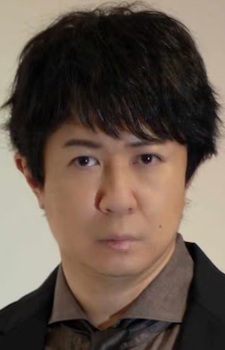
Sugita, Tomokazu
Japanese

Koyanagi, Hanako
Main
Sawashiro, Miyuki
Japanese

Momose, Narumi
Main
Date, Arisa
Japanese

Nifuji, Hirotaka
Main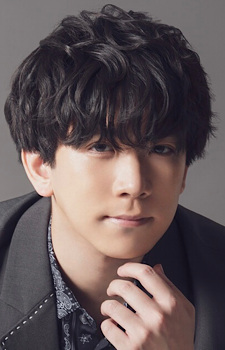
Itou, Kent
Japanese
Nifuji, Hirotaka
Main
Tamura, Mutsumi
Japanese

Aiba
Supporting
Yashiro, Taku
Japanese

Baba
Supporting
Terashima, Takuma
Japanese

Chiba
Supporting
Nagae, Rika
Japanese

Doumoto
Supporting
Kashii, Shouto
Japanese

Ichijou, Yoshiki
Supporting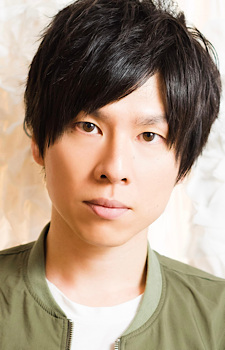
Akabane, Kenji
Japanese

Mitsui, Kensuke
Supporting
Okamoto, Nobuhiko
Japanese

Nifuji, Naoya
Supporting
Kaji, Yuuki
Japanese
Nifuji, Naoya
Supporting
Takahashi, Minami
Japanese

Sakuragi, Kou
Supporting
Yuuki, Aoi
Japanese
Staff

Fujiyama, Naokado
Producer

Suzuki, Kenta
Producer

Nagayama, Asami
Assistant Producer
Ooshima, Kazuki
Assistant Producer
Shibata, Misaki
Assistant Producer

Hiraike, Yoshimasa
Director, Script, Series Composition

Tsuchiya, Masanori
Sound Director
Asami, Matsuo
Episode Director

Horiuchi, Takashi
Episode Director
Koga, Kazuomi
Episode Director

Saga, Satoshi
Episode Director
Takashima, Daisuke
Episode Director

Takeshita, Ryouhei
Episode Director, Storyboard
Tobita, Tsuyoshi
Episode Director

Shinozuka, Tomoko
Script
Takagi, Seiko
Script

Kanasaki, Takaomi
Storyboard
Saitou, Tetsuhito
Storyboard
Shimazu, Hiroyuki
Storyboard
Watanabe, Satoru
Storyboard