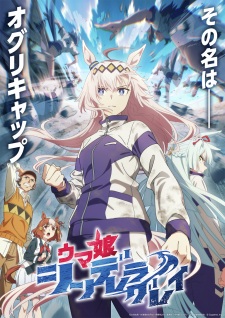
Uma Musume: Cinderella Gray
Summary: Tokyo is the home of national-level horse girls and the next generation of running prodigies. Jou Kitahara, a rookie trainer with big dreams and modest expectations, does not expect to find talent in the quiet town of Kasamatsu—until he meets an ash-gray-haired girl with a wild, unconventional stride.
As a child with bad knees, Oguri Cap spent much of her early life in pain, struggling to stand. But through relentless perseverance, she overcame her limits and found liberation in the very thing that once seemed impossible: running. While the other horse girls at Kasamatsu chase victory and fame, Oguri runs without ambition, driven only by the joy of movement.
Fujimasa March, a rising regional star, commands attention with her discipline, talent, and tenacity. For her, running is a matter of pride. But when a school-organized race brings her face-to-face with Oguri's raw, unpolished stride, March's confidence begins to waver. In turn, something in Oguri shifts after racing March. For the first time, a spark of ambition ignites within her—a desire to win that will take her beyond the confines of her hometown to the grand stages waiting on the horizon.
[Written by MAL Rewrite]
Description
Tokyo is the home of national-level horse girls and the next generation of running prodigies. Jou Kitahara, a rookie trainer with big dreams and modest expectations, does not expect to find talent in the quiet town of Kasamatsu—until he meets an ash-gray-haired girl with a wild, unconventional stride.
As a child with bad knees, Oguri Cap spent much of her early life in pain, struggling to stand. But through relentless perseverance, she overcame her limits and found liberation in the very thing that once seemed impossible: running. While the other horse girls at Kasamatsu chase victory and fame, Oguri runs without ambition, driven only by the joy of movement.
Fujimasa March, a rising regional star, commands attention with her discipline, talent, and tenacity. For her, running is a matter of pride. But when a school-organized race brings her face-to-face with Oguri's raw, unpolished stride, March's confidence begins to waver. In turn, something in Oguri shifts after racing March. For the first time, a spark of ambition ignites within her—a desire to win that will take her beyond the confines of her hometown to the grand stages waiting on the horizon.
[Written by MAL Rewrite]
Available At
- Array
- Array
- Array
Uma Musume: Cinderella Gray Trailers
Uma Musume: Cinderella Gray Pictures
Uma Musume: Cinderella Gray Review
Uma Musume: Cinderella Gray — Tokyo is the home of national-level horse girls and the next generation of running prodigies. This overview is intentionally spoiler-free and focuses on tone and intent rather than plot specifics.
Thematically, It sits firmly within Drama, Sports conventions as a TV work and has garnered attention (MAL score: 8.56). This work explores character dynamics, tonal shifts, and the interplay between narrative ambition and execution. The story's pacing and tonal choices are crafted to complement the central ideas, often emphasizing atmosphere and emotional truth over explicit exposition. The show's ability to evoke a consistent mood — whether melancholic, exuberant, or contemplative — is a recurring strength, and the scenes are constructed so viewers can infer stakes without needing explicit spoilers.
Characterization is a core pillar here. Protagonists and supporting figures are written with distinct motivations and narrative roles; even when archetypal, the series invests in small behavioral details that make choices feel earned. Character arcs are handled with an eye for gradualism: development often arrives through incremental beats rather than abrupt, expository shifts. The interactions between characters create texture, and relationships are used to illuminate both personal flaws and larger thematic concerns.
On the visual front, production values play a significant role. The animation quality varies by sequence but frequently showcases thoughtful direction and composition. Background art, framing, and color palettes are used deliberately to support tone — quieter scenes favor muted palettes while action or heightened emotional beats employ brighter, more kinetic visuals. Direction choices, such as camera movement and shot selection, often elevate scenes beyond their raw script, creating moments that linger in the viewer's mind.
The soundscape — score, incidental music, and sound design — complements the visual language. Music cues are placed to maximize emotional resonance without manipulating the audience with melodrama; this restraint often leads to more authentic emotional payoff. Sound design punctuates key moments, and when the series leans on silence, those quieter moments are given weight by measured audio choices.
Pacing and structure are handled with craft. Episodes are arranged to build tension and release methodically, and the narrative rarely rushes through important emotional beats. That said, the deliberate pacing may feel slow to viewers who prefer faster plot turnover; the reward is greater nuance and an accumulation of meaning across the series. Accessibility is generally good — one can appreciate surface-level pleasures, while repeat or attentive viewing reveals additional layers.
No title is without flaws. Occasional unevenness in subplots or variable animation across episodes can be distracting. Some tonal shifts might feel abrupt if you expect uniformity; others will argue that those shifts are purposeful. These are worth noting, but they seldom undercut the larger achievements of the work.
In sum, Uma Musume: Cinderella Gray offers a rich experience for viewers who value character-driven storytelling, considered visual design, and a soundtrack that supports rather than overwhelms. For fans of Drama, Sports, this is an especially rewarding watch. It's recommended for those who appreciate layered narratives and artistry in animation, and best approached with patience and attention to nuance.
Characters & Voice Actors
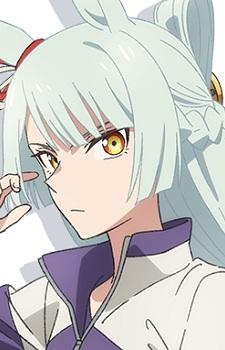
Fujimasa March
Main
Ise, Mariya
Japanese

Oguri Cap
Main
Takayanagi, Tomoyo
Japanese

Akasaka, Misato
Supporting
Akesaka, Satomi
Japanese

Akitsu Teio
Supporting
Kujime, Nagisa
Japanese

Belno Light
Supporting
Seto, Momoko
Japanese

Blacky Ale
Supporting
Mori, Nanako
Japanese

Dicta Striker
Supporting
Hanamori, Yumiri
Japanese

Dynam Heroine
Supporting
Ookubo, Rumi
Japanese

Fujii, Sensuke
Supporting
Takahashi, Daisuke
Japanese
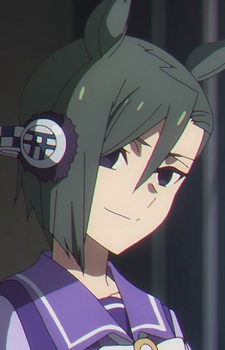
God Hannibal
Supporting
Kaiden, Michiko
Japanese

Gold City
Supporting
Kousaka, Saki
Japanese

Hayakawa, Tazuna
Supporting
Fujii, Yukiyo
Japanese

Iwao, Yuuichi
Supporting
Takeuchi, Ryouta
Japanese

Kawamura, Hiyori
Supporting
Nabatame, Hitomi
Japanese

Kitahara, Jou
Supporting
Konishi, Katsuyuki
Japanese

Komiyama, Masami
Supporting
Shiraishi, Ryouko
Japanese

Kraft Univer
Supporting
Tanaka, Takako
Japanese

Luna Swallow
Supporting
Natsume, Hina
Japanese

Maruzensky
Supporting
Lynn
Japanese
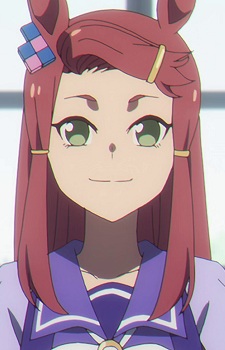
Meiken Tsukasa
Supporting
Kazama, Mayuko
Japanese
Staff

Arai, Kouta
Producer
Chikamatsu, Takuya
Producer
Itou, Masahiko
Producer
Machiguchi, Souta
Producer
Seita, Jouji
Producer
Yamamoto, Maki
Producer

Itou, Yuuki
Director, Storyboard
Miura, Takehiro
Director, Episode Director, Storyboard

Gou, Fumiyuki
Sound Director

Akutsu, Tetsuya
Episode Director, Storyboard
Enomoto, Nao
Episode Director
Hayashi, Kenta
Episode Director
Hirota, Haruka
Episode Director
Horiguchi, Kazuki
Episode Director, Storyboard
Kakuchi, Takudai
Episode Director, Storyboard
Kawahara, Ryouta
Episode Director, Storyboard
Kurinishi, Yuusuke
Episode Director
Maeda, Motomasa
Episode Director
Morishita, Yuuki
Episode Director, Storyboard, Animation Director
Narikawa, Takashi
Episode Director