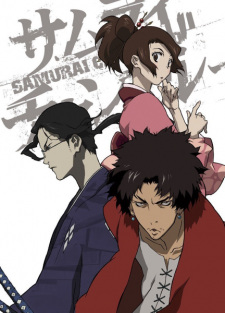
Samurai Champloo
Summary: Fuu Kasumi is a young and clumsy waitress who spends her days peacefully working in a small teahouse. That is, until she accidentally spills a drink all over one of her customers! With a group of samurai now incessantly harassing her, Fuu desperately calls upon another samurai in the shop, Mugen, who quickly defeats them with his wild fighting technique, utilizing movements reminiscent to that of breakdancing. Unfortunately, Mugen decides to pick a fight with the unwilling ronin Jin, who wields a more precise and traditional style of swordfighting, and the latter proves to be a formidable opponent. The only problem is, they end up destroying the entire shop as well as accidentally killing the local magistrate's son.
For their crime, the two samurai are captured and set to be executed. However, they are rescued by Fuu, who hires the duo as her bodyguards. Though she no longer has a place to return to, the former waitress wishes to find a certain samurai who smells of sunflowers and enlists the help of the now exonerated pair to do so. Despite initially disapproving of this idea, the two eventually agree to assist the girl in her quest; thus, the trio embark upon an adventure to find this mysterious warrior—that is, if Fuu can keep Mugen and Jin from killing each other.
Set in an alternate Edo Period of Japan, Samurai Champloo follows the journey of these three eccentric individuals in an epic quest full of action, comedy, and dynamic sword fighting, all set to the beat of a unique hip-hop infused soundtrack.
[Written by MAL Rewrite]
Description
Fuu Kasumi is a young and clumsy waitress who spends her days peacefully working in a small teahouse. That is, until she accidentally spills a drink all over one of her customers! With a group of samurai now incessantly harassing her, Fuu desperately calls upon another samurai in the shop, Mugen, who quickly defeats them with his wild fighting technique, utilizing movements reminiscent to that of breakdancing. Unfortunately, Mugen decides to pick a fight with the unwilling ronin Jin, who wields a more precise and traditional style of swordfighting, and the latter proves to be a formidable opponent. The only problem is, they end up destroying the entire shop as well as accidentally killing the local magistrate's son.
For their crime, the two samurai are captured and set to be executed. However, they are rescued by Fuu, who hires the duo as her bodyguards. Though she no longer has a place to return to, the former waitress wishes to find a certain samurai who smells of sunflowers and enlists the help of the now exonerated pair to do so. Despite initially disapproving of this idea, the two eventually agree to assist the girl in her quest; thus, the trio embark upon an adventure to find this mysterious warrior—that is, if Fuu can keep Mugen and Jin from killing each other.
Set in an alternate Edo Period of Japan, Samurai Champloo follows the journey of these three eccentric individuals in an epic quest full of action, comedy, and dynamic sword fighting, all set to the beat of a unique hip-hop infused soundtrack.
[Written by MAL Rewrite]
Available At
Warning: Array to string conversion in /home/hianime.me.uk/public_html/anime.php on line 243
Array
Samurai Champloo Pictures
Samurai Champloo Review
Samurai Champloo — Fuu Kasumi is a young and clumsy waitress who spends her days peacefully working in a small teahouse. This overview is intentionally spoiler-free and focuses on tone and intent rather than plot specifics.
Thematically, It sits firmly within Action, Adventure, Comedy conventions as a TV work and has garnered attention (MAL score: 8.52). This work explores character dynamics, tonal shifts, and the interplay between narrative ambition and execution. The story's pacing and tonal choices are crafted to complement the central ideas, often emphasizing atmosphere and emotional truth over explicit exposition. The show's ability to evoke a consistent mood — whether melancholic, exuberant, or contemplative — is a recurring strength, and the scenes are constructed so viewers can infer stakes without needing explicit spoilers.
Characterization is a core pillar here. Protagonists and supporting figures are written with distinct motivations and narrative roles; even when archetypal, the series invests in small behavioral details that make choices feel earned. Character arcs are handled with an eye for gradualism: development often arrives through incremental beats rather than abrupt, expository shifts. The interactions between characters create texture, and relationships are used to illuminate both personal flaws and larger thematic concerns.
On the visual front, production values play a significant role. The animation quality varies by sequence but frequently showcases thoughtful direction and composition. Background art, framing, and color palettes are used deliberately to support tone — quieter scenes favor muted palettes while action or heightened emotional beats employ brighter, more kinetic visuals. Direction choices, such as camera movement and shot selection, often elevate scenes beyond their raw script, creating moments that linger in the viewer's mind.
The soundscape — score, incidental music, and sound design — complements the visual language. Music cues are placed to maximize emotional resonance without manipulating the audience with melodrama; this restraint often leads to more authentic emotional payoff. Sound design punctuates key moments, and when the series leans on silence, those quieter moments are given weight by measured audio choices.
Pacing and structure are handled with craft. Episodes are arranged to build tension and release methodically, and the narrative rarely rushes through important emotional beats. That said, the deliberate pacing may feel slow to viewers who prefer faster plot turnover; the reward is greater nuance and an accumulation of meaning across the series. Accessibility is generally good — one can appreciate surface-level pleasures, while repeat or attentive viewing reveals additional layers.
No title is without flaws. Occasional unevenness in subplots or variable animation across episodes can be distracting. Some tonal shifts might feel abrupt if you expect uniformity; others will argue that those shifts are purposeful. These are worth noting, but they seldom undercut the larger achievements of the work.
In sum, Samurai Champloo offers a rich experience for viewers who value character-driven storytelling, considered visual design, and a soundtrack that supports rather than overwhelms. For fans of Action, Adventure, Comedy, this is an especially rewarding watch. It's recommended for those who appreciate layered narratives and artistry in animation, and best approached with patience and attention to nuance.
Characters & Voice Actors

Jin
Main
Thornton, Kirk
English
Jin
Main
Sato, Ginpei
Japanese
Jin
Main
Pfeiffer, Markus
German
Jin
Main
Strempler, Christian
Spanish
Jin
Main
Shin, Yong Wu
Korean
Jin
Main
Loddi, Loris
Italian
Jin
Main
Itchart, Eduard
Spanish
Jin
Main
Barbeito, José Luíz
Portuguese (BR)
Jin
Main
Goasdoué, Tanguy
French

Kasumi, Fuu
Main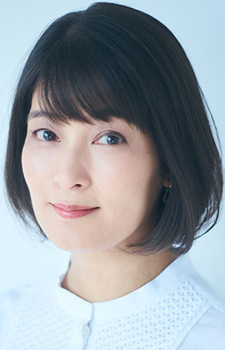
Kawasumi, Ayako
Japanese
Kasumi, Fuu
Main
Wahlgren, Kari
English
Kasumi, Fuu
Main
Dorenkamp, Corinna
German
Kasumi, Fuu
Main
Riça, Iara
Portuguese (BR)
Kasumi, Fuu
Main
Amendola, Alessia
Italian
Kasumi, Fuu
Main
Yang, Jeong Hwa
Korean
Kasumi, Fuu
Main
Baroin, Chantal
French
Kasumi, Fuu
Main
Ortiz, Mariana
Spanish
Kasumi, Fuu
Main
Roca, Mar
Spanish

Mugen
Main
Blum, Steven
English
Mugen
Main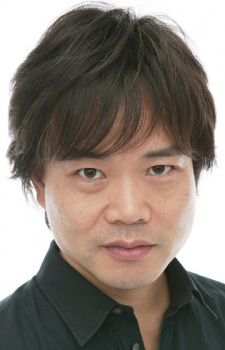
Nakai, Kazuya
Japanese
Staff
Hamano, Takatoshi
Producer
Kouchiyama, Takashi
Producer
Satomi, Tetsurou
Producer

Watanabe, Shinichirou
Director, Episode Director, Script, Storyboard

Inokawa, Shintarou
Episode Director
Miyoshi, Masato
Episode Director

Murase, Shukou
Episode Director, Storyboard, Key Animation

Nakazawa, Kazuto
Episode Director, Script, Storyboard, Chief Animation Director, Key Animation, Character Design, Animation Director
Noshitani, Mitsutaka
Episode Director
Sasajima, Keiichi
Episode Director, Key Animation
Tsunematsu, Kei
Episode Director

Yamamoto, Sayo
Episode Director, Storyboard
Yokoyama, Akitoshi
Episode Director, Storyboard, Key Animation
Yoshimoto, Tsuyoshi
Episode Director
Yoshimura, Akira
Episode Director

Machida, Touko
Script

Nobumoto, Keiko
Script
Obara, Shinji
Script

Satou, Dai
Script
Sugi, Ryouta
Script