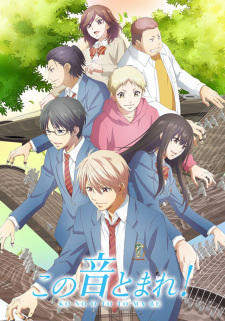
Kono Oto Tomare! Part 2
Summary: The Tokise High School Koto Club has courageously pushed through their fractured and unsynchronized performance at the Kanto Region Traditional Japanese Music Festival. Club members Chika Kudou, Satowa Houzuki, Takezou Kurata, Hiro Kurusu, Kouta Mizuhara, Saneyasu Adachi, and Michitaka Sakai are devastated to learn the negative results of their performance, leaving them crushed. Nonetheless, the group recognizes their potential and enthusiastically agree to collectively sharpen their skills, improve their flaws, and develop higher caliber playing to succeed in the upcoming national qualifiers in winter.
With the help of their now willing club advisor Suzuka Takinami, the group's goal gradually becomes achievable as they begin to grasp the foundations of good music and refine their koto-playing abilities, with the suggestion of performing more often to gain what they lack most—experience.
However, as their journey to nationals is underway, the koto club members face challenges that obstruct their focus and progress. Not only does the threat of other powerhouse schools and musicians remain, but the high school issues of budding romance and soon-to-be-graduating seniors also begin to push the limits of the determined group of teenagers and the future of the koto club.
[Written by MAL Rewrite]
Description
The Tokise High School Koto Club has courageously pushed through their fractured and unsynchronized performance at the Kanto Region Traditional Japanese Music Festival. Club members Chika Kudou, Satowa Houzuki, Takezou Kurata, Hiro Kurusu, Kouta Mizuhara, Saneyasu Adachi, and Michitaka Sakai are devastated to learn the negative results of their performance, leaving them crushed. Nonetheless, the group recognizes their potential and enthusiastically agree to collectively sharpen their skills, improve their flaws, and develop higher caliber playing to succeed in the upcoming national qualifiers in winter.
With the help of their now willing club advisor Suzuka Takinami, the group's goal gradually becomes achievable as they begin to grasp the foundations of good music and refine their koto-playing abilities, with the suggestion of performing more often to gain what they lack most—experience.
However, as their journey to nationals is underway, the koto club members face challenges that obstruct their focus and progress. Not only does the threat of other powerhouse schools and musicians remain, but the high school issues of budding romance and soon-to-be-graduating seniors also begin to push the limits of the determined group of teenagers and the future of the koto club.
[Written by MAL Rewrite]
Available At
- Array
Kono Oto Tomare! Part 2 Trailers
Kono Oto Tomare! Part 2 Pictures
Kono Oto Tomare! Part 2 Review
Kono Oto Tomare! Part 2 — The Tokise High School Koto Club has courageously pushed through their fractured and unsynchronized performance at the Kanto Region Traditional Japanese Music Festival. This overview is intentionally spoiler-free and focuses on tone and intent rather than plot specifics.
Thematically, It sits firmly within Drama conventions as a TV work and has garnered attention (MAL score: 8.42). This work explores character dynamics, tonal shifts, and the interplay between narrative ambition and execution. The story's pacing and tonal choices are crafted to complement the central ideas, often emphasizing atmosphere and emotional truth over explicit exposition. The show's ability to evoke a consistent mood — whether melancholic, exuberant, or contemplative — is a recurring strength, and the scenes are constructed so viewers can infer stakes without needing explicit spoilers.
Characterization is a core pillar here. Protagonists and supporting figures are written with distinct motivations and narrative roles; even when archetypal, the series invests in small behavioral details that make choices feel earned. Character arcs are handled with an eye for gradualism: development often arrives through incremental beats rather than abrupt, expository shifts. The interactions between characters create texture, and relationships are used to illuminate both personal flaws and larger thematic concerns.
On the visual front, production values play a significant role. The animation quality varies by sequence but frequently showcases thoughtful direction and composition. Background art, framing, and color palettes are used deliberately to support tone — quieter scenes favor muted palettes while action or heightened emotional beats employ brighter, more kinetic visuals. Direction choices, such as camera movement and shot selection, often elevate scenes beyond their raw script, creating moments that linger in the viewer's mind.
The soundscape — score, incidental music, and sound design — complements the visual language. Music cues are placed to maximize emotional resonance without manipulating the audience with melodrama; this restraint often leads to more authentic emotional payoff. Sound design punctuates key moments, and when the series leans on silence, those quieter moments are given weight by measured audio choices.
Pacing and structure are handled with craft. Episodes are arranged to build tension and release methodically, and the narrative rarely rushes through important emotional beats. That said, the deliberate pacing may feel slow to viewers who prefer faster plot turnover; the reward is greater nuance and an accumulation of meaning across the series. Accessibility is generally good — one can appreciate surface-level pleasures, while repeat or attentive viewing reveals additional layers.
No title is without flaws. Occasional unevenness in subplots or variable animation across episodes can be distracting. Some tonal shifts might feel abrupt if you expect uniformity; others will argue that those shifts are purposeful. These are worth noting, but they seldom undercut the larger achievements of the work.
In sum, Kono Oto Tomare! Part 2 offers a rich experience for viewers who value character-driven storytelling, considered visual design, and a soundtrack that supports rather than overwhelms. For fans of Drama, this is an especially rewarding watch. It's recommended for those who appreciate layered narratives and artistry in animation, and best approached with patience and attention to nuance.
Characters & Voice Actors

Adachi, Saneyasu
Main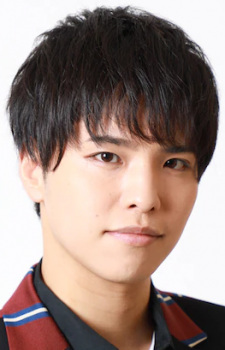
Ishiya, Haruki
Japanese
Adachi, Saneyasu
Main
Tindle, Austin
English
Adachi, Saneyasu
Main
Coldibelli, Vitor
Portuguese (BR)

Houzuki, Satowa
Main
Tanezaki, Atsumi
Japanese
Houzuki, Satowa
Main
Connors, Amber Lee
English
Houzuki, Satowa
Main
Cárdia, Jéssica
Portuguese (BR)
Houzuki, Satowa
Main
Lujambio, Nadia
Spanish

Kudou, Chika
Main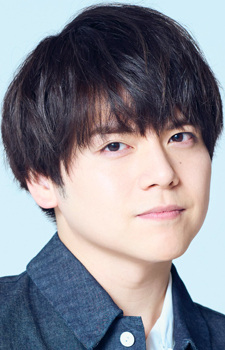
Uchida, Yuuma
Japanese
Kudou, Chika
Main
Mills, Daman
English
Kudou, Chika
Main
Vestri, Alexander
Portuguese (BR)
Kudou, Chika
Main
Kuri, Víctor
Spanish

Kurata, Takezou
Main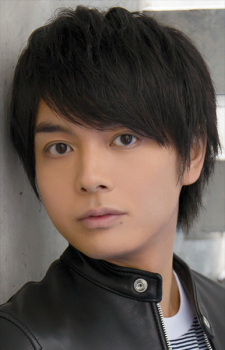
Enoki, Junya
Japanese
Kurata, Takezou
Main
Saab, Alejandro
English
Kurata, Takezou
Main
Alonso, Renan
Portuguese (BR)
Kurata, Takezou
Main
Rivas Villareal, Fernando
Spanish

Kurusu, Hiro
Main
Matsumoto, Sara
Japanese
Kurusu, Hiro
Main
Tipton, Alexis
English
Kurusu, Hiro
Main
Munuera, Viviane
Portuguese (BR)
Kurusu, Hiro
Main
Tavera, Valeria
Spanish

Mizuhara, Kouta
Main
Iguchi, Yuuichi
Japanese
Staff

Cook, Justin
Producer

Herek, Samantha
Assistant Producer

Mizuno, Ryouma
Director, Episode Director, Storyboard

Takakuwa, Hajime
Sound Director
Katou, Akira
Episode Director
Kobayashi, Takashi
Episode Director
Okuno, Hiroyuki
Episode Director, Animation Director

Ooba, Hideaki
Episode Director, Storyboard
Hisao, Ayumu
Script, Series Composition
Sakamoto, Tatsunori
Storyboard
Yoshikawa, Hiroaki
Storyboard

Aoi, Shouta
Theme Song Performance
Hibino, Hirofumi
Theme Song Arrangement
Nagai, Masamichi
Theme Song Composition, Theme Song Arrangement, Theme Song Lyrics

Sonoda, Kentarou
Theme Song Composition, Theme Song Lyrics
Uchida, Yuuma
Theme Song Performance

Ballard, Tia
ADR Director

Haneoka, Kei
Music
Itou, Mina
Animation Director
Kajiura, Shinichirou
Animation Director