
Kimi no Suizou wo Tabetai
Summary: The aloof protagonist: a bookworm who is deeply detached from the world he resides in. He has no interest in others and is firmly convinced that nobody has any interest in him either. His story begins when he stumbles across a handwritten book, titled Living with Dying. He soon identifies it as a secret diary belonging to his popular, bubbly classmate Sakura Yamauchi. She then confides in him about the pancreatic disease she is suffering from and that her time left is finite. Only her family knows about her terminal illness; not even her best friends are aware. Despite this revelation, he shows zero sympathy for her plight, but caught in the waves of Sakura's persistent buoyancy, he eventually concedes to accompanying her for her remaining days.
As the pair of polar opposites interact, their connection strengthens, interweaving through their choices made with each passing day. Her apparent nonchalance and unpredictability disrupts the protagonist's impassive flow of life, gradually opening his heart as he discovers and embraces the true meaning of living.
[Written by MAL Rewrite]
Description
The aloof protagonist: a bookworm who is deeply detached from the world he resides in. He has no interest in others and is firmly convinced that nobody has any interest in him either. His story begins when he stumbles across a handwritten book, titled Living with Dying. He soon identifies it as a secret diary belonging to his popular, bubbly classmate Sakura Yamauchi. She then confides in him about the pancreatic disease she is suffering from and that her time left is finite. Only her family knows about her terminal illness; not even her best friends are aware. Despite this revelation, he shows zero sympathy for her plight, but caught in the waves of Sakura's persistent buoyancy, he eventually concedes to accompanying her for her remaining days.
As the pair of polar opposites interact, their connection strengthens, interweaving through their choices made with each passing day. Her apparent nonchalance and unpredictability disrupts the protagonist's impassive flow of life, gradually opening his heart as he discovers and embraces the true meaning of living.
[Written by MAL Rewrite]
Available At
- Array
Kimi no Suizou wo Tabetai Trailers
Kimi no Suizou wo Tabetai Pictures
Kimi no Suizou wo Tabetai Review
Kimi no Suizou wo Tabetai — The aloof protagonist: a bookworm who is deeply detached from the world he resides in. This overview is intentionally spoiler-free and focuses on tone and intent rather than plot specifics.
Thematically, It sits firmly within Drama, Romance conventions as a Movie work and has garnered attention (MAL score: 8.55). This work explores character dynamics, tonal shifts, and the interplay between narrative ambition and execution. The story's pacing and tonal choices are crafted to complement the central ideas, often emphasizing atmosphere and emotional truth over explicit exposition. The show's ability to evoke a consistent mood — whether melancholic, exuberant, or contemplative — is a recurring strength, and the scenes are constructed so viewers can infer stakes without needing explicit spoilers.
Characterization is a core pillar here. Protagonists and supporting figures are written with distinct motivations and narrative roles; even when archetypal, the series invests in small behavioral details that make choices feel earned. Character arcs are handled with an eye for gradualism: development often arrives through incremental beats rather than abrupt, expository shifts. The interactions between characters create texture, and relationships are used to illuminate both personal flaws and larger thematic concerns.
On the visual front, production values play a significant role. The animation quality varies by sequence but frequently showcases thoughtful direction and composition. Background art, framing, and color palettes are used deliberately to support tone — quieter scenes favor muted palettes while action or heightened emotional beats employ brighter, more kinetic visuals. Direction choices, such as camera movement and shot selection, often elevate scenes beyond their raw script, creating moments that linger in the viewer's mind.
The soundscape — score, incidental music, and sound design — complements the visual language. Music cues are placed to maximize emotional resonance without manipulating the audience with melodrama; this restraint often leads to more authentic emotional payoff. Sound design punctuates key moments, and when the series leans on silence, those quieter moments are given weight by measured audio choices.
Pacing and structure are handled with craft. Episodes are arranged to build tension and release methodically, and the narrative rarely rushes through important emotional beats. That said, the deliberate pacing may feel slow to viewers who prefer faster plot turnover; the reward is greater nuance and an accumulation of meaning across the series. Accessibility is generally good — one can appreciate surface-level pleasures, while repeat or attentive viewing reveals additional layers.
No title is without flaws. Occasional unevenness in subplots or variable animation across episodes can be distracting. Some tonal shifts might feel abrupt if you expect uniformity; others will argue that those shifts are purposeful. These are worth noting, but they seldom undercut the larger achievements of the work.
In sum, Kimi no Suizou wo Tabetai offers a rich experience for viewers who value character-driven storytelling, considered visual design, and a soundtrack that supports rather than overwhelms. For fans of Drama, Romance, this is an especially rewarding watch. It's recommended for those who appreciate layered narratives and artistry in animation, and best approached with patience and attention to nuance.
Characters & Voice Actors

Shiga, Haruki
Main
Takasugi, Mahiro
Japanese
Shiga, Haruki
Main
Daymond, Robbie
English
Shiga, Haruki
Main
Cannella, Mirko
Italian
Shiga, Haruki
Main
Ruiz, Miguel Ángel
Spanish
Shiga, Haruki
Main
Mutsuda, Masumi
Spanish
Shiga, Haruki
Main
Borg, Yoann
French
Shiga, Haruki
Main
El Kammouchi, Karim
German

Yamauchi, Sakura
Main
Lynn
Japanese
Yamauchi, Sakura
Main
Harlacher, Erika
English
Yamauchi, Sakura
Main
Franceschetti, Giulia
Italian
Yamauchi, Sakura
Main
Aubertot, Émilie
French
Yamauchi, Sakura
Main
Ugalde, Erika
Spanish
Yamauchi, Sakura
Main
Wurmer, Lara
German
Yamauchi, Sakura
Main
Moreno, Marta
Spanish

Miyata, Issei
Supporting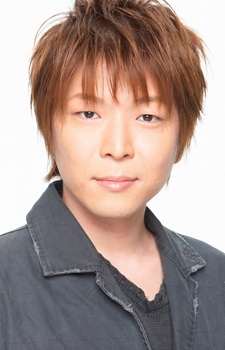
Fukushima, Jun
Japanese
Miyata, Issei
Supporting
Dao, Khoi
English
Miyata, Issei
Supporting
Briglione, Marco
Italian

Shiga, Father
Supporting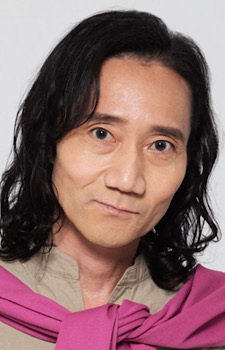
Miki, Shinichiro
Japanese
Shiga, Father
Supporting
Seitz, Patrick
English
Shiga, Father
Supporting
Fanchon, Lucas
French
Staff
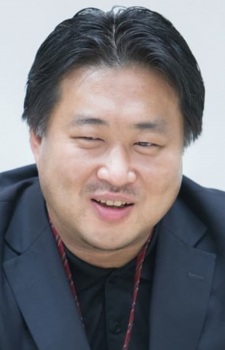
Kashiwada, Shinichirou
Producer

Mita, Keiji
Producer

Niwa, Masami
Producer

Takahashi, Yuuma
Producer
Kimura, Yoshitaka
Assistant Producer

Ushijima, Shinichirou
Director, Episode Director, Script, Storyboard

Hata, Shouji
Sound Director
Fujise, Junichi
Episode Director

Itamura, Tomoyuki
Episode Director, Storyboard
Tomoda, Masaharu
Episode Director

Yoshida, Daisuke
Episode Director, Storyboard
Yoshimura, Fumihiro
Episode Director

Kataoka, Kenta
Theme Song Composition, Theme Song Lyrics

sumika
Theme Song Performance
Ajiki, Kei
Key Animation
Akizuki, Aya
Key Animation
Arai, Hiroaki
Animation Director
Araki, Yutaka
Key Animation

Bonjour Suzuki
Inserted Song Performance
Fujii, Shingo
Key Animation