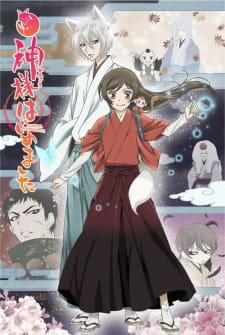
Kamisama Hajimemashita◎
Summary: Nanami Momozono and her familiars Tomoe and Mizuki have survived quite a few challenges since Nanami took up the mantle of Mikage Shrine's patron god. Naturally, the wind god Otohiko comes to invite Nanami to the Divine Assembly in Izumo, the home of the gods, and Nanami chooses to take Mizuki with her, leaving Tomoe to pose as her at school. However, she has an ulterior motive for attending the Divine Assembly: to discover the whereabouts of the missing Lord Mikage, the former god of the shrine.
After her adventures in Izumo, Nanami meets Botanmaru, a tengu child looking for someone she knows all too well—tengu turned goth idol Shinjirou Kurama. Botanmaru needs Shinjirou, their prince, to return home to Mount Kurama and stop the tyranny of Jirou, who has taken over the rule of their hometown. However, Nanami soon discovers a force much darker than Jirou is at work on the mountain.
As a fledgling god becoming more accustomed to divinity, Nanami finds herself dealing with a tengu rebellion, her blooming feelings for Tomoe, and a strange man with ties to both Tomoe's past and Nanami's future.
[Written by MAL Rewrite]
Description
Nanami Momozono and her familiars Tomoe and Mizuki have survived quite a few challenges since Nanami took up the mantle of Mikage Shrine's patron god. Naturally, the wind god Otohiko comes to invite Nanami to the Divine Assembly in Izumo, the home of the gods, and Nanami chooses to take Mizuki with her, leaving Tomoe to pose as her at school. However, she has an ulterior motive for attending the Divine Assembly: to discover the whereabouts of the missing Lord Mikage, the former god of the shrine.
After her adventures in Izumo, Nanami meets Botanmaru, a tengu child looking for someone she knows all too well—tengu turned goth idol Shinjirou Kurama. Botanmaru needs Shinjirou, their prince, to return home to Mount Kurama and stop the tyranny of Jirou, who has taken over the rule of their hometown. However, Nanami soon discovers a force much darker than Jirou is at work on the mountain.
As a fledgling god becoming more accustomed to divinity, Nanami finds herself dealing with a tengu rebellion, her blooming feelings for Tomoe, and a strange man with ties to both Tomoe's past and Nanami's future.
[Written by MAL Rewrite]
Available At
- Array
Kamisama Hajimemashita◎ Trailers
Kamisama Hajimemashita◎ Pictures
Kamisama Hajimemashita◎ Review
Kamisama Hajimemashita◎ — Nanami Momozono and her familiars Tomoe and Mizuki have survived quite a few challenges since Nanami took up the mantle of Mikage Shrine's patron god. This overview is intentionally spoiler-free and focuses on tone and intent rather than plot specifics.
Thematically, It sits firmly within Comedy, Romance, Supernatural conventions as a TV work and has garnered attention (MAL score: 8.23). This work explores character dynamics, tonal shifts, and the interplay between narrative ambition and execution. The story's pacing and tonal choices are crafted to complement the central ideas, often emphasizing atmosphere and emotional truth over explicit exposition. The show's ability to evoke a consistent mood — whether melancholic, exuberant, or contemplative — is a recurring strength, and the scenes are constructed so viewers can infer stakes without needing explicit spoilers.
Characterization is a core pillar here. Protagonists and supporting figures are written with distinct motivations and narrative roles; even when archetypal, the series invests in small behavioral details that make choices feel earned. Character arcs are handled with an eye for gradualism: development often arrives through incremental beats rather than abrupt, expository shifts. The interactions between characters create texture, and relationships are used to illuminate both personal flaws and larger thematic concerns.
On the visual front, production values play a significant role. The animation quality varies by sequence but frequently showcases thoughtful direction and composition. Background art, framing, and color palettes are used deliberately to support tone — quieter scenes favor muted palettes while action or heightened emotional beats employ brighter, more kinetic visuals. Direction choices, such as camera movement and shot selection, often elevate scenes beyond their raw script, creating moments that linger in the viewer's mind.
The soundscape — score, incidental music, and sound design — complements the visual language. Music cues are placed to maximize emotional resonance without manipulating the audience with melodrama; this restraint often leads to more authentic emotional payoff. Sound design punctuates key moments, and when the series leans on silence, those quieter moments are given weight by measured audio choices.
Pacing and structure are handled with craft. Episodes are arranged to build tension and release methodically, and the narrative rarely rushes through important emotional beats. That said, the deliberate pacing may feel slow to viewers who prefer faster plot turnover; the reward is greater nuance and an accumulation of meaning across the series. Accessibility is generally good — one can appreciate surface-level pleasures, while repeat or attentive viewing reveals additional layers.
No title is without flaws. Occasional unevenness in subplots or variable animation across episodes can be distracting. Some tonal shifts might feel abrupt if you expect uniformity; others will argue that those shifts are purposeful. These are worth noting, but they seldom undercut the larger achievements of the work.
In sum, Kamisama Hajimemashita◎ offers a rich experience for viewers who value character-driven storytelling, considered visual design, and a soundtrack that supports rather than overwhelms. For fans of Comedy, Romance, Supernatural, this is an especially rewarding watch. It's recommended for those who appreciate layered narratives and artistry in animation, and best approached with patience and attention to nuance.
Characters & Voice Actors

Momozono, Nanami
Main
Ballard, Tia
English
Momozono, Nanami
Main
Mimori, Suzuko
Japanese
Momozono, Nanami
Main
Ángeles, Jessica
Spanish

Tomoe
Main
Tachibana, Shinnosuke
Japanese
Tomoe
Main
Tatum, J. Michael
English
Tomoe
Main
Flores, Óscar
Spanish

Akuraou
Supporting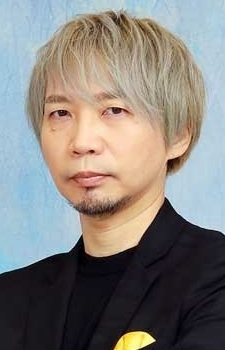
Suwabe, Junichi
Japanese
Akuraou
Supporting
Potter, Brandon
English
Akuraou
Supporting
Tejedo, Ricardo
Spanish

Aotake
Supporting
McFarland, Mike
English
Aotake
Supporting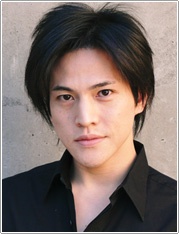
Ichinose, Hidekazu
Japanese
Aotake
Supporting
Roig Jr., Jorge
Spanish

Botanmaru
Supporting
Saitou, Ayaka
Japanese
Botanmaru
Supporting
Woodhull, Lara
English

Daidaimaru
Supporting
Sutton, Kristin
English

Hiou
Supporting
Shimizu, Kaori
Japanese
Hiou
Supporting
Seidel, Lindsay
English
Hiou
Supporting
Rojas, Annie
Spanish
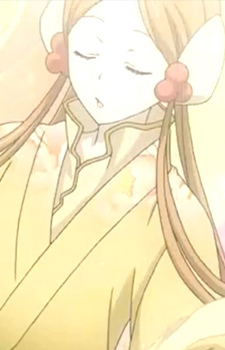
Inaho
Supporting
Apprill, Bryn
English
Inaho
Supporting
Yurin
Japanese
Staff

Cook, Justin
Producer

Hayashi, Ikumi
Producer
Ishiyama, Keiichi
Producer
Yamaguchi, Kenji
Producer

Daichi, Akitarou
Director

Akagi, Hiroaki
Episode Director, Storyboard
Iwasaki, Tomoko
Episode Director, Storyboard
Kanbara, Toshiaki
Episode Director

Murano, Yuuta
Episode Director, Storyboard
Yabana, Kaoru
Episode Director

Yamamoto, Yasuichiro
Episode Director

Marchi, Jamie
Script

Fujimori, Masaya
Storyboard
Honda, Yasuyuki
Storyboard

Hanae
Theme Song Performance
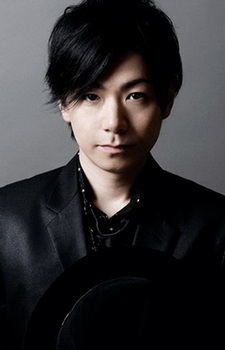
Kishio, Daisuke
Theme Song Performance, Inserted Song Performance

Suárez, Luis Leonardo
Theme Song Lyrics
Aoi, Takashi
Art Director

Castañeda, Arturo
ADR Director

Fukunaga, Gen
Executive Producer