
Kaiba
Summary: In a world where memories exist in memory chips separate from the body, death of the body no longer means death of the soul. It is possible for memories to be viewed, altered, and transferred between bodies. These memory chips are used by the rich to obtain eternal lives in carefully selected bodies, while for the poor, selling their own bodies and conserving their souls in the chips often become the only way to earn a living. An electrolytic cloud in the sky serves as a barrier between the heavens of the fortunate and the underworld of the destitute, making this social division impregnable.
One day, a man named Kaiba wakes up in an empty room with no memories, a mysterious hole in his chest, and a locket holding the picture of an unknown woman. After escaping an attack and stumbling upon a decrepit village of underworld residents, he begins his adventure across the different planets of this strange universe to find out more about his own identity and the woman he once knew.
Through a journey of self-discovery and acceptance, Kaiba weaves together tales of souls and spirits and explores the importance of memories.
[Written by MAL Rewrite]
Description
In a world where memories exist in memory chips separate from the body, death of the body no longer means death of the soul. It is possible for memories to be viewed, altered, and transferred between bodies. These memory chips are used by the rich to obtain eternal lives in carefully selected bodies, while for the poor, selling their own bodies and conserving their souls in the chips often become the only way to earn a living. An electrolytic cloud in the sky serves as a barrier between the heavens of the fortunate and the underworld of the destitute, making this social division impregnable.
One day, a man named Kaiba wakes up in an empty room with no memories, a mysterious hole in his chest, and a locket holding the picture of an unknown woman. After escaping an attack and stumbling upon a decrepit village of underworld residents, he begins his adventure across the different planets of this strange universe to find out more about his own identity and the woman he once knew.
Through a journey of self-discovery and acceptance, Kaiba weaves together tales of souls and spirits and explores the importance of memories.
[Written by MAL Rewrite]
Available At
- Array
- Array
Kaiba Trailers
Kaiba Pictures
Kaiba Review
Kaiba — In a world where memories exist in memory chips separate from the body, death of the body no longer means death of the soul. This overview is intentionally spoiler-free and focuses on tone and intent rather than plot specifics.
Thematically, It sits firmly within Adventure, Avant Garde, Award Winning, Mystery, Romance, Sci-Fi conventions as a TV work and has garnered attention (MAL score: 8.14). This work explores character dynamics, tonal shifts, and the interplay between narrative ambition and execution. The story's pacing and tonal choices are crafted to complement the central ideas, often emphasizing atmosphere and emotional truth over explicit exposition. The show's ability to evoke a consistent mood — whether melancholic, exuberant, or contemplative — is a recurring strength, and the scenes are constructed so viewers can infer stakes without needing explicit spoilers.
Characterization is a core pillar here. Protagonists and supporting figures are written with distinct motivations and narrative roles; even when archetypal, the series invests in small behavioral details that make choices feel earned. Character arcs are handled with an eye for gradualism: development often arrives through incremental beats rather than abrupt, expository shifts. The interactions between characters create texture, and relationships are used to illuminate both personal flaws and larger thematic concerns.
On the visual front, production values play a significant role. The animation quality varies by sequence but frequently showcases thoughtful direction and composition. Background art, framing, and color palettes are used deliberately to support tone — quieter scenes favor muted palettes while action or heightened emotional beats employ brighter, more kinetic visuals. Direction choices, such as camera movement and shot selection, often elevate scenes beyond their raw script, creating moments that linger in the viewer's mind.
The soundscape — score, incidental music, and sound design — complements the visual language. Music cues are placed to maximize emotional resonance without manipulating the audience with melodrama; this restraint often leads to more authentic emotional payoff. Sound design punctuates key moments, and when the series leans on silence, those quieter moments are given weight by measured audio choices.
Pacing and structure are handled with craft. Episodes are arranged to build tension and release methodically, and the narrative rarely rushes through important emotional beats. That said, the deliberate pacing may feel slow to viewers who prefer faster plot turnover; the reward is greater nuance and an accumulation of meaning across the series. Accessibility is generally good — one can appreciate surface-level pleasures, while repeat or attentive viewing reveals additional layers.
No title is without flaws. Occasional unevenness in subplots or variable animation across episodes can be distracting. Some tonal shifts might feel abrupt if you expect uniformity; others will argue that those shifts are purposeful. These are worth noting, but they seldom undercut the larger achievements of the work.
In sum, Kaiba offers a rich experience for viewers who value character-driven storytelling, considered visual design, and a soundtrack that supports rather than overwhelms. For fans of Adventure, Avant Garde, Award Winning, Mystery, Romance, Sci-Fi, this is an especially rewarding watch. It's recommended for those who appreciate layered narratives and artistry in animation, and best approached with patience and attention to nuance.
Characters & Voice Actors

Kaiba
Main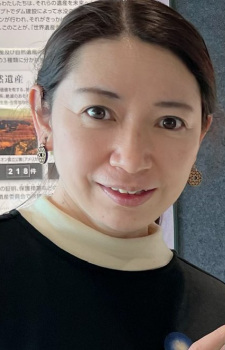
Kuwashima, Houko
Japanese

Neiro
Main
Noto, Mamiko
Japanese

Popo
Main
Park, Romi
Japanese

Baby
Supporting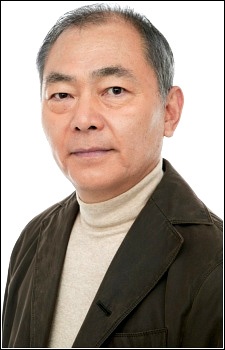
Ishizuka, Unshou
Japanese

Butter
Supporting
Nishiwaki, Tamotsu
Japanese

Cheki
Supporting
Fujimura, Ayumi
Japanese

Chroniko
Supporting
Saitou, Chiwa
Japanese

Grandma
Supporting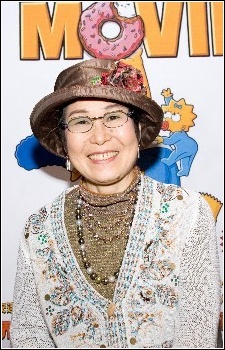
Suzuki, Reiko
Japanese

Hyo-hyo
Supporting
Mizuta, Wasabi
Japanese

Kichi
Supporting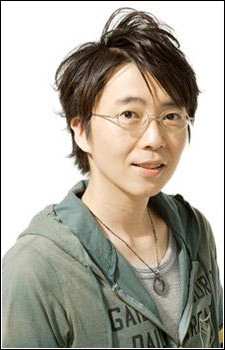
Iwanaga, Tetsuya
Japanese

Kochu
Supporting
Hibi, Aiko
Japanese

Narrator
Supporting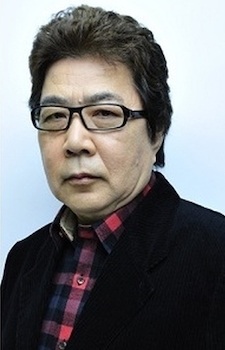
Genda, Tesshou
Japanese

Nisemono Warp
Supporting
Sanpei, Yuuko
Japanese

Patch
Supporting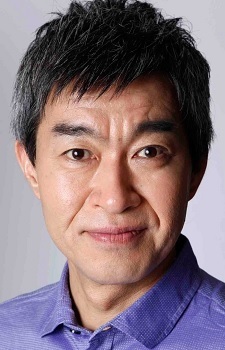
Cho
Japanese

Quilt
Supporting
Sate
Supporting
Kaida, Yuuko
Japanese

Vanilla
Supporting
Egawa, Hisao
Japanese
Staff
Fujio, Tsutomu
Producer
Kitaura, Hiroyuki
Producer
Koike, Yukiko
Producer
Tamura, Manabu
Producer

Yuasa, Masaaki
Director, Episode Director, Script, Storyboard, Original Creator, Series Composition
Momose, Keiichi
Sound Director

Choi, Eun-Young
Episode Director, Script, Storyboard, Animation Director, 2nd Key Animation, Key Animation

Mihara, Michio
Episode Director, Storyboard, Key Animation, In-Between Animation, Animation Director
Takahashi, Tomoya
Episode Director, Script, Storyboard
Yokoyama, Akitoshi
Episode Director, Storyboard, Key Animation, Screenplay
Vickers, Jamie
Storyboard, Animation Director, Key Animation

Kagami, Seira
Theme Song Lyrics, Theme Song Performance
Nishihira, Akira
Theme Song Arrangement
Abe, Junko
Key Animation

Amemiya, Akira
Key Animation

Arai, Kouichi
Key Animation

Asano, Naoyuki
Key Animation
Endou, Yutaka
Publicity
Furumiya, Youko
Background Art
Hamada, Takayuki
Key Animation