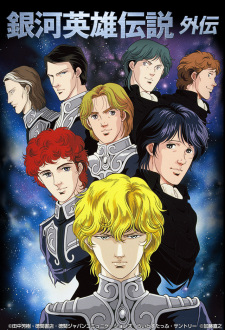
Ginga Eiyuu Densetsu Gaiden (1999)
Summary: Ginga Eiyuu Densetsu Gaiden (1999) is the second of two OVA adaptations of side stories from the Ginga Eiyuu Densetsu novel series. This second adaptation follows the achievements of Yang Wen-li of the Free Planets Alliance before the fateful Battle of Astarte, and continues the tales of Reinhard von Müsel and Siegfried Kircheis of the Galactic Empire.
Spiral Labyrinth
Yang is propelled to the spotlight after his famous evacuation of civilians from El Facil. Following an unofficial double promotion and a flurry of media attention, he chronicles his research of the Year 730 Mafia—a close-knit group of Alliance military officers centered around the famed tactician Bruce Ashbey. He investigates a startling claim by Ashbey's deceased widow that may have enormous political ramifications: that the great war hero was not killed in action but murdered.
The Mutineer
Reinhard and Kircheis are posted on the destroyer Hameln II, docked at Iserlohn Fortress. After gaining the respect of the crew, Reinhard's leadership is tested when the captain is severely wounded and passes command authority to Reinhard, the next-highest ranking officer on deck.
The Duelist
While Reinhard and Kircheis are working in the Imperial capital Odin, Reinhard learns of a mining rights dispute involving Dorothea von Schaffhausen, a friend of his sister Annerose von Grünewald. Upon hearing that Count Herxheimer intends to settle the matter with a duel, Reinhard volunteers to represent the Schaffhausen family.
The Retriever
After falling out of favor with the nobility, Count Herxheimer is trying to escape to the Free Planets Alliance with a stolen Seffle particle generator prototype. Reinhard is tasked with retrieving both the prototype and the defector, but is only assigned the cruiser Hässliche Entlein due to the confidential nature of the mission.
The Third Battle of Tiamat
To commemorate the 30th year of the reign of Kaiser Friedrich IV, the Empire announces a large-scale military campaign against the Free Planets Alliance. In the ensuing clash between the Imperial expeditionary force and three Alliance fleets, Reinhard's timely intervention shapes the tides of war.
[Written by MAL Rewrite]
Description
Ginga Eiyuu Densetsu Gaiden (1999) is the second of two OVA adaptations of side stories from the Ginga Eiyuu Densetsu novel series. This second adaptation follows the achievements of Yang Wen-li of the Free Planets Alliance before the fateful Battle of Astarte, and continues the tales of Reinhard von Müsel and Siegfried Kircheis of the Galactic Empire.
Spiral Labyrinth
Yang is propelled to the spotlight after his famous evacuation of civilians from El Facil. Following an unofficial double promotion and a flurry of media attention, he chronicles his research of the Year 730 Mafia—a close-knit group of Alliance military officers centered around the famed tactician Bruce Ashbey. He investigates a startling claim by Ashbey's deceased widow that may have enormous political ramifications: that the great war hero was not killed in action but murdered.
The Mutineer
Reinhard and Kircheis are posted on the destroyer Hameln II, docked at Iserlohn Fortress. After gaining the respect of the crew, Reinhard's leadership is tested when the captain is severely wounded and passes command authority to Reinhard, the next-highest ranking officer on deck.
The Duelist
While Reinhard and Kircheis are working in the Imperial capital Odin, Reinhard learns of a mining rights dispute involving Dorothea von Schaffhausen, a friend of his sister Annerose von Grünewald. Upon hearing that Count Herxheimer intends to settle the matter with a duel, Reinhard volunteers to represent the Schaffhausen family.
The Retriever
After falling out of favor with the nobility, Count Herxheimer is trying to escape to the Free Planets Alliance with a stolen Seffle particle generator prototype. Reinhard is tasked with retrieving both the prototype and the defector, but is only assigned the cruiser Hässliche Entlein due to the confidential nature of the mission.
The Third Battle of Tiamat
To commemorate the 30th year of the reign of Kaiser Friedrich IV, the Empire announces a large-scale military campaign against the Free Planets Alliance. In the ensuing clash between the Imperial expeditionary force and three Alliance fleets, Reinhard's timely intervention shapes the tides of war.
[Written by MAL Rewrite]
Available At
Warning: Array to string conversion in /home/hianime.me.uk/public_html/anime.php on line 243
Array
Ginga Eiyuu Densetsu Gaiden (1999) Pictures
Ginga Eiyuu Densetsu Gaiden (1999) Review
Ginga Eiyuu Densetsu Gaiden (1999) — Ginga Eiyuu Densetsu Gaiden (1999) is the second of two OVA adaptations of side stories from the Ginga Eiyuu Densetsu novel series. This overview is intentionally spoiler-free and focuses on tone and intent rather than plot specifics.
Thematically, It sits firmly within Action, Drama, Sci-Fi conventions as a OVA work and has garnered attention (MAL score: 8.06). This work explores character dynamics, tonal shifts, and the interplay between narrative ambition and execution. The story's pacing and tonal choices are crafted to complement the central ideas, often emphasizing atmosphere and emotional truth over explicit exposition. The show's ability to evoke a consistent mood — whether melancholic, exuberant, or contemplative — is a recurring strength, and the scenes are constructed so viewers can infer stakes without needing explicit spoilers.
Characterization is a core pillar here. Protagonists and supporting figures are written with distinct motivations and narrative roles; even when archetypal, the series invests in small behavioral details that make choices feel earned. Character arcs are handled with an eye for gradualism: development often arrives through incremental beats rather than abrupt, expository shifts. The interactions between characters create texture, and relationships are used to illuminate both personal flaws and larger thematic concerns.
On the visual front, production values play a significant role. The animation quality varies by sequence but frequently showcases thoughtful direction and composition. Background art, framing, and color palettes are used deliberately to support tone — quieter scenes favor muted palettes while action or heightened emotional beats employ brighter, more kinetic visuals. Direction choices, such as camera movement and shot selection, often elevate scenes beyond their raw script, creating moments that linger in the viewer's mind.
The soundscape — score, incidental music, and sound design — complements the visual language. Music cues are placed to maximize emotional resonance without manipulating the audience with melodrama; this restraint often leads to more authentic emotional payoff. Sound design punctuates key moments, and when the series leans on silence, those quieter moments are given weight by measured audio choices.
Pacing and structure are handled with craft. Episodes are arranged to build tension and release methodically, and the narrative rarely rushes through important emotional beats. That said, the deliberate pacing may feel slow to viewers who prefer faster plot turnover; the reward is greater nuance and an accumulation of meaning across the series. Accessibility is generally good — one can appreciate surface-level pleasures, while repeat or attentive viewing reveals additional layers.
No title is without flaws. Occasional unevenness in subplots or variable animation across episodes can be distracting. Some tonal shifts might feel abrupt if you expect uniformity; others will argue that those shifts are purposeful. These are worth noting, but they seldom undercut the larger achievements of the work.
In sum, Ginga Eiyuu Densetsu Gaiden (1999) offers a rich experience for viewers who value character-driven storytelling, considered visual design, and a soundtrack that supports rather than overwhelms. For fans of Action, Drama, Sci-Fi, this is an especially rewarding watch. It's recommended for those who appreciate layered narratives and artistry in animation, and best approached with patience and attention to nuance.
Characters & Voice Actors

Kircheis, Siegfried
Main
Hironaka, Masashi
Japanese

von Lohengramm, Reinhard
Main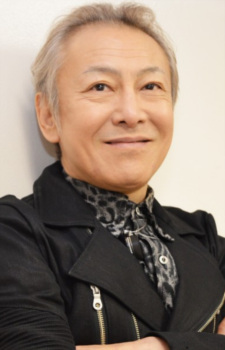
Horikawa, Ryo
Japanese

Yang, Wen-li
Main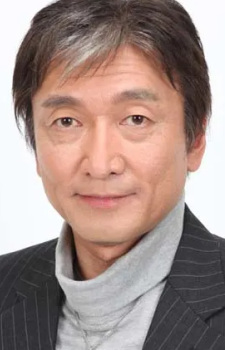
Gouda, Hozumi
Japanese

Ashbey, Bruce
Supporting
Kazama, Morio
Japanese

Attenborough, Dusty
Supporting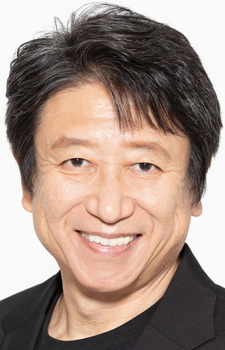
Inoue, Kazuhiko
Japanese

Bertram, Hartmann
Supporting
Kanou, Akira
Japanese

Bucock, Alexander
Supporting
Madono, Mitsuaki
Japanese

Cazellnu, Alex
Supporting
Yamada, Keaton
Japanese

Cope, John Drinker
Supporting
Sako, Masato
Japanese
Costea, Barnaby
Supporting
di Bertini, Vittorio
Supporting
Nomura, Kenji
Japanese

Edwards, Jessica
Supporting
Koyama, Mami
Japanese

Fang, Tchewling
Supporting
Sugou, Takayuki
Japanese

Greenhill, Frederica
Supporting
Kuwashima, Houko
Japanese

Jasper, Frederick
Supporting
Fujiwara, Keiji
Japanese

Kartenborn
Supporting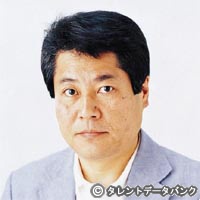
Horibe, Ryuuichi
Japanese

Keit
Supporting
Gotou, Tetsuo
Japanese

Lap, Jean Robert
Supporting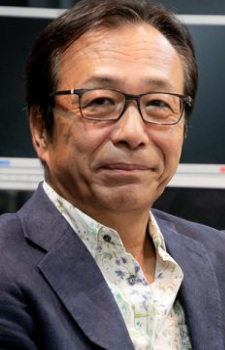
Tanaka, Hideyuki
Japanese

Lennenkampf, Helmut
Supporting
Watabe, Takeshi
Japanese

Lutz, Cornelius
Supporting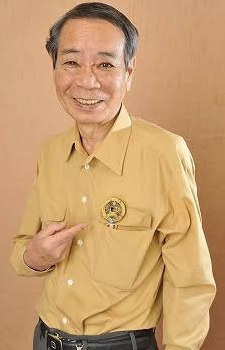
Hori, Katsunosuke
Japanese
Staff
Kikukawa, Yukio
Producer
Shimizu, Keizou
Director

Aketagawa, Susumu
Sound Director
Abe, Masashi
Episode Director, Storyboard
Miyata, Ryou
Episode Director
Noshitani, Mitsutaka
Episode Director
Okajima, Kunitoshi
Episode Director
Tsuchiya, Akira
Episode Director, Storyboard
Ueno, Fumihiro
Episode Director, Storyboard

Takahashi, Natsuko
Script

Ogura, Kei
Theme Song Composition, Theme Song Performance, Theme Song Lyrics

Bruckner, Anton
Music

Dezaki, Tetsu
Production Manager

Dvořák, Antonín
Music
Hinata, Masaki
Layout, Animation Director
Ishida, Keiichi
Animation Director
Kawata, Toshihiro
Director of Photography
Kume, Kazunari
Original Character Design

Mahler, Gustav
Music
Masui, Ippei
Animation Director