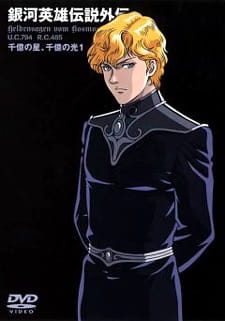
Ginga Eiyuu Densetsu Gaiden
Summary: Ginga Eiyuu Densetsu Gaiden is the first of two OVA adaptations of side stories from the Ginga Eiyuu Densetsu novel series. This first adaptation follows the achievements of Reinhard von Müsel and Siegfried Kircheis of the Galactic Empire before the fateful Battle of Astarte.
The Silver-White Valley
Reinhard and Kircheis graduate from their military academy and are immediately sent to the frozen frontier planet Kapche-Lanka. Unbeknownst to them, their new superior schemes to kill Reinhard on behalf of a rival of Reinhard's sister Annerose von Grünewald.
Dreams of the Morning, Songs of the Night
Reinhard and Kircheis are assigned to the Imperial Military Police, where they uncover the corrupt and oppressive practices of the Empire's law enforcement. They are soon ordered to investigate the murder of a student at their alma mater.
Dishonor
As Reinhard awaits the bestowal of his new title of Count von Lohengramm, he sends Kircheis to the artificial resort satellite Kreuznach III for a vacation. Restless from the lack of work, Kircheis assists the local police with a drug trafficking case related to an attack on a disgraced former Vice Admiral.
A Hundred Billion Stars, a Hundred Billion Lights
While Reinhard is still a commodore in charge of only a single squadron, he laments the incompetence of his superiors during a battle against the Free Planets Alliance. Amassing military successes under the direct command of Vice Admiral Richard von Grimmelshausen, Reinhard repeatedly clashes with Hermann von Lüneburg, a commodore and former regimental commander of the Alliance's infamous Rosen Ritter.
[Written by MAL Rewrite]
Description
Ginga Eiyuu Densetsu Gaiden is the first of two OVA adaptations of side stories from the Ginga Eiyuu Densetsu novel series. This first adaptation follows the achievements of Reinhard von Müsel and Siegfried Kircheis of the Galactic Empire before the fateful Battle of Astarte.
The Silver-White Valley
Reinhard and Kircheis graduate from their military academy and are immediately sent to the frozen frontier planet Kapche-Lanka. Unbeknownst to them, their new superior schemes to kill Reinhard on behalf of a rival of Reinhard's sister Annerose von Grünewald.
Dreams of the Morning, Songs of the Night
Reinhard and Kircheis are assigned to the Imperial Military Police, where they uncover the corrupt and oppressive practices of the Empire's law enforcement. They are soon ordered to investigate the murder of a student at their alma mater.
Dishonor
As Reinhard awaits the bestowal of his new title of Count von Lohengramm, he sends Kircheis to the artificial resort satellite Kreuznach III for a vacation. Restless from the lack of work, Kircheis assists the local police with a drug trafficking case related to an attack on a disgraced former Vice Admiral.
A Hundred Billion Stars, a Hundred Billion Lights
While Reinhard is still a commodore in charge of only a single squadron, he laments the incompetence of his superiors during a battle against the Free Planets Alliance. Amassing military successes under the direct command of Vice Admiral Richard von Grimmelshausen, Reinhard repeatedly clashes with Hermann von Lüneburg, a commodore and former regimental commander of the Alliance's infamous Rosen Ritter.
[Written by MAL Rewrite]
Ginga Eiyuu Densetsu Gaiden Pictures
Ginga Eiyuu Densetsu Gaiden Review
Ginga Eiyuu Densetsu Gaiden — Ginga Eiyuu Densetsu Gaiden is the first of two OVA adaptations of side stories from the Ginga Eiyuu Densetsu novel series. This overview is intentionally spoiler-free and focuses on tone and intent rather than plot specifics.
Thematically, It sits firmly within Action, Drama, Sci-Fi conventions as a OVA work and has garnered attention (MAL score: 8.14). This work explores character dynamics, tonal shifts, and the interplay between narrative ambition and execution. The story's pacing and tonal choices are crafted to complement the central ideas, often emphasizing atmosphere and emotional truth over explicit exposition. The show's ability to evoke a consistent mood — whether melancholic, exuberant, or contemplative — is a recurring strength, and the scenes are constructed so viewers can infer stakes without needing explicit spoilers.
Characterization is a core pillar here. Protagonists and supporting figures are written with distinct motivations and narrative roles; even when archetypal, the series invests in small behavioral details that make choices feel earned. Character arcs are handled with an eye for gradualism: development often arrives through incremental beats rather than abrupt, expository shifts. The interactions between characters create texture, and relationships are used to illuminate both personal flaws and larger thematic concerns.
On the visual front, production values play a significant role. The animation quality varies by sequence but frequently showcases thoughtful direction and composition. Background art, framing, and color palettes are used deliberately to support tone — quieter scenes favor muted palettes while action or heightened emotional beats employ brighter, more kinetic visuals. Direction choices, such as camera movement and shot selection, often elevate scenes beyond their raw script, creating moments that linger in the viewer's mind.
The soundscape — score, incidental music, and sound design — complements the visual language. Music cues are placed to maximize emotional resonance without manipulating the audience with melodrama; this restraint often leads to more authentic emotional payoff. Sound design punctuates key moments, and when the series leans on silence, those quieter moments are given weight by measured audio choices.
Pacing and structure are handled with craft. Episodes are arranged to build tension and release methodically, and the narrative rarely rushes through important emotional beats. That said, the deliberate pacing may feel slow to viewers who prefer faster plot turnover; the reward is greater nuance and an accumulation of meaning across the series. Accessibility is generally good — one can appreciate surface-level pleasures, while repeat or attentive viewing reveals additional layers.
No title is without flaws. Occasional unevenness in subplots or variable animation across episodes can be distracting. Some tonal shifts might feel abrupt if you expect uniformity; others will argue that those shifts are purposeful. These are worth noting, but they seldom undercut the larger achievements of the work.
In sum, Ginga Eiyuu Densetsu Gaiden offers a rich experience for viewers who value character-driven storytelling, considered visual design, and a soundtrack that supports rather than overwhelms. For fans of Action, Drama, Sci-Fi, this is an especially rewarding watch. It's recommended for those who appreciate layered narratives and artistry in animation, and best approached with patience and attention to nuance.
Characters & Voice Actors

Kircheis, Siegfried
Main
Hironaka, Masashi
Japanese

von Lohengramm, Reinhard
Main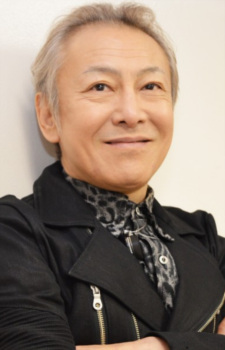
Horikawa, Ryo
Japanese

Attenborough, Dusty
Supporting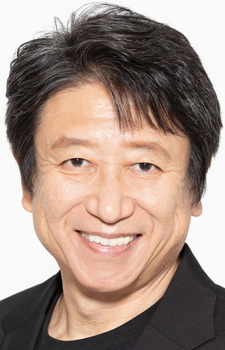
Inoue, Kazuhiko
Japanese

Bittenfeld, Fritz Joseph
Supporting
Noda, Keiichi
Japanese

Blumhardt, Rainer
Supporting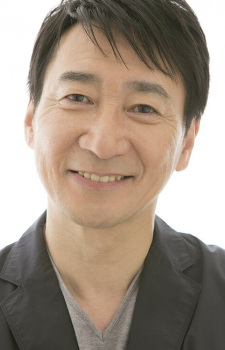
Nanba, Keiichi
Japanese

Cerebrese, Sinclair
Supporting
Asado, Tetsuya
Japanese

Eugen
Supporting
Glacer
Supporting
Ishinami, Yoshito
Japanese

Herder
Supporting
Miyata, Hikaru
Japanese

Hugenberch
Supporting
Seki, Toshihiko
Japanese

Hughes, Warren
Supporting
Yao, Kazuki
Japanese

Kessler, Ulrich
Supporting
Ikeda, Shuuichi
Japanese

Linz, Kasper
Supporting
Kosugi, Juurouta
Japanese

Lobos, Lazar
Supporting
Ooki, Tamio
Japanese

Martel
Supporting
Kanao, Tetsuo
Japanese

Mittermeyer, Wolfgang
Supporting
Mori, Katsuji
Japanese

Narrator
Supporting
Yara, Yuusaku
Japanese

Poplan, Olivier
Supporting
Furukawa, Toshio
Japanese

Staden
Supporting
von Beenemünde, Sussanna
Supporting
Fujita, Toshiko
Japanese
Staff
Kikukawa, Yukio
Producer

Ishiguro, Noboru
Director

Aketagawa, Susumu
Sound Director
Miyata, Ryou
Episode Director
Okajima, Kunitoshi
Episode Director
Ueno, Fumihiro
Episode Director

Shudou, Takeshi
Script

Suzuki, Toshimasa
Storyboard, Key Animation
Tanaka, Jou
Storyboard, Animation Director, Mechanical Design, Background Art

Ogura, Kei
Theme Song Composition, Theme Song Lyrics, Theme Song Performance
Aoyagi, Shigemi
Key Animation
Fukushima, Yoshiharu
Key Animation
Fukuyama, Eiji
Key Animation
Hinata, Masaki
Key Animation

Imaizumi, Kenichi
Animation Director
Itou, Kaori
In-Between Animation
Itou, Yoshiaki
Key Animation
Kataoka, Kouji
Key Animation
Kiyoshima, Yuuko
Key Animation
Kouno, Keiko
Key Animation