
Full Moon wo Sagashite
Summary: Two years ago, Mitsuki Kouyama's friend, Eichi Sakurai, moved to America before she could confess her feelings to him. Though she cannot contact him, they made a promise to fulfill their respective dreams: Mitsuki wants to become a professional singer, and Eichi an astronomer. She hopes that one day her music will reach him across the world with a brilliance like that of the full moon.
There is just one catch: Mitsuki suffers from throat cancer, which makes her voice quiet and singing strenuous. Her grandmother, who has a hatred of music, insists that Mitsuki undergo surgery to remove the cancer, but she refuses due to the risk of losing her voice. One day, two shinigami—Meroko Yui and Takuto Kira—appear to tell her that she only has one year left to live. This sudden revelation spurs Mitsuki into action, and she decides that with Meroko and Takuto's help, she will become a professional singer in the time she has left.
Full Moon wo Sagashite follows the emotional story of Mitsuki and her shinigami friends as they discover what it means to sing—and ultimately, what it means to live.
[Written by MAL Rewrite]
Description
Two years ago, Mitsuki Kouyama's friend, Eichi Sakurai, moved to America before she could confess her feelings to him. Though she cannot contact him, they made a promise to fulfill their respective dreams: Mitsuki wants to become a professional singer, and Eichi an astronomer. She hopes that one day her music will reach him across the world with a brilliance like that of the full moon.
There is just one catch: Mitsuki suffers from throat cancer, which makes her voice quiet and singing strenuous. Her grandmother, who has a hatred of music, insists that Mitsuki undergo surgery to remove the cancer, but she refuses due to the risk of losing her voice. One day, two shinigami—Meroko Yui and Takuto Kira—appear to tell her that she only has one year left to live. This sudden revelation spurs Mitsuki into action, and she decides that with Meroko and Takuto's help, she will become a professional singer in the time she has left.
Full Moon wo Sagashite follows the emotional story of Mitsuki and her shinigami friends as they discover what it means to sing—and ultimately, what it means to live.
[Written by MAL Rewrite]
Full Moon wo Sagashite Pictures
Full Moon wo Sagashite Review
Full Moon wo Sagashite — Two years ago, Mitsuki Kouyama's friend, Eichi Sakurai, moved to America before she could confess her feelings to him. This overview is intentionally spoiler-free and focuses on tone and intent rather than plot specifics.
Thematically, It sits firmly within Comedy, Drama, Romance, Supernatural conventions as a TV work and has garnered attention (MAL score: 7.93). This work explores character dynamics, tonal shifts, and the interplay between narrative ambition and execution. The story's pacing and tonal choices are crafted to complement the central ideas, often emphasizing atmosphere and emotional truth over explicit exposition. The show's ability to evoke a consistent mood — whether melancholic, exuberant, or contemplative — is a recurring strength, and the scenes are constructed so viewers can infer stakes without needing explicit spoilers.
Characterization is a core pillar here. Protagonists and supporting figures are written with distinct motivations and narrative roles; even when archetypal, the series invests in small behavioral details that make choices feel earned. Character arcs are handled with an eye for gradualism: development often arrives through incremental beats rather than abrupt, expository shifts. The interactions between characters create texture, and relationships are used to illuminate both personal flaws and larger thematic concerns.
On the visual front, production values play a significant role. The animation quality varies by sequence but frequently showcases thoughtful direction and composition. Background art, framing, and color palettes are used deliberately to support tone — quieter scenes favor muted palettes while action or heightened emotional beats employ brighter, more kinetic visuals. Direction choices, such as camera movement and shot selection, often elevate scenes beyond their raw script, creating moments that linger in the viewer's mind.
The soundscape — score, incidental music, and sound design — complements the visual language. Music cues are placed to maximize emotional resonance without manipulating the audience with melodrama; this restraint often leads to more authentic emotional payoff. Sound design punctuates key moments, and when the series leans on silence, those quieter moments are given weight by measured audio choices.
Pacing and structure are handled with craft. Episodes are arranged to build tension and release methodically, and the narrative rarely rushes through important emotional beats. That said, the deliberate pacing may feel slow to viewers who prefer faster plot turnover; the reward is greater nuance and an accumulation of meaning across the series. Accessibility is generally good — one can appreciate surface-level pleasures, while repeat or attentive viewing reveals additional layers.
No title is without flaws. Occasional unevenness in subplots or variable animation across episodes can be distracting. Some tonal shifts might feel abrupt if you expect uniformity; others will argue that those shifts are purposeful. These are worth noting, but they seldom undercut the larger achievements of the work.
In sum, Full Moon wo Sagashite offers a rich experience for viewers who value character-driven storytelling, considered visual design, and a soundtrack that supports rather than overwhelms. For fans of Comedy, Drama, Romance, Supernatural, this is an especially rewarding watch. It's recommended for those who appreciate layered narratives and artistry in animation, and best approached with patience and attention to nuance.
Characters & Voice Actors

Kira, Takuto
Main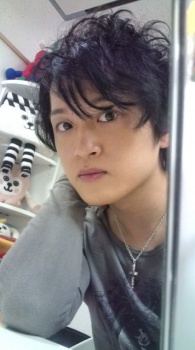
Sakurazuka, Yakkun
Japanese
Kira, Takuto
Main
Watson, Jeffrey
English
Kira, Takuto
Main
Ootsuda, Hiromi
Japanese
Kira, Takuto
Main
Kim, Jang
Korean
Kira, Takuto
Main
Bautista, Ricardo
Spanish

Kouyama, Mitsuki
Main
Myco
Japanese
Kouyama, Mitsuki
Main
Lee, Yong Sin
Korean
Kouyama, Mitsuki
Main
Rowan, Katie
English
Kouyama, Mitsuki
Main
Gil, Leslie
Spanish
Kouyama, Mitsuki
Main
Lin, Angel
Mandarin

Yui, Meroko
Main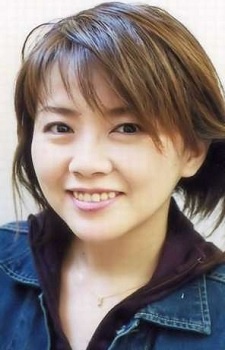
Honda, Chieko
Japanese
Yui, Meroko
Main
Aguilar, Montserrat
Spanish
Yui, Meroko
Main
Davies, Leda
English

Acchan
Supporting
Day, Carol-Anne
English

AD Ito
Supporting
Schartner, Jordan
English

Adopting Father
Supporting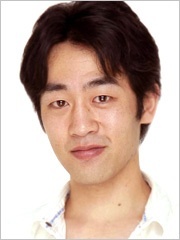
Shimozaki, Hiroshi
Japanese
Adopting Father
Supporting
Heffernan, Charles
English

Adopting Mother
Supporting
Nakao, Yuki
Japanese
Adopting Mother
Supporting
Jayoussi, Maizun
English

Akiba, Kotarou
Supporting
Mori, Norihisa
Japanese
Staff

Yamakawa, Norio
Producer

Miyake, Masanori
Assistant Producer

Katou, Toshiyuki
Director, Episode Director, Storyboard

Hiramitsu, Takuya
Sound Director
Furukawa, Masami
Episode Director
Hirata, Yutaka
Episode Director
Hong, Hun-pyo
Episode Director

Itou, Naoyuki
Episode Director, Storyboard

Masunari, Koji
Episode Director
Oyunamu
Episode Director
Shimizu, Akira
Episode Director, Storyboard

Shirahata, Bob
Episode Director
Toukairin, Shinichi
Episode Director, Storyboard
Ueno, Fumihiro
Episode Director
Watanabe, Kenichirou
Episode Director

Yamaguchi, Mihiro
Episode Director, Storyboard
Yoshida, Shunji
Episode Director
Yoshimoto, Tsuyoshi
Episode Director, Storyboard
Hiro, Masaki
Script, Series Composition

Konparu, Tomoko
Script