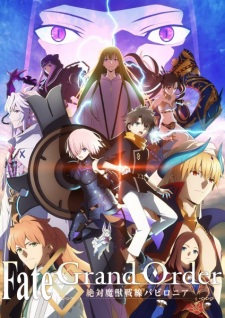
Fate/Grand Order: Zettai Majuu Sensen Babylonia
Summary: A.D. 2016, the foundations of humanity have been incinerated by the Mage King Solomon. Chaldea, a secret mages organization with the mission to preserve humanity's future, foresaw mankind's extinction in 2015. Thus commenced the operation to repair the Singularities in history caused by Holy Grails dispersed across time and space—Operation Grand Order.
Using the Rayshift time travel technology, Chaldea's last master Ritsuka Fujimaru and his demi-servant Mash Kyrielight have traveled to and resolved six Singularities. Now, they depart for their most dangerous destination yet: a civilization in the Age of Gods, B.C. 2655 Mesopotamia. Ritsuka and Mash soon discover that Demonic Beasts roam the land, attacking people and towns. Amidst chaos and terror lies humanity's last defense—Uruk, a fortress city that acts as the frontline for the battle against the beasts. The battlefront is commanded by none other than King Gilgamesh, the King of Heroes, who sought aid from Heroic Spirits and took on the role of a mage to protect his city.
Along with Gilgamesh and the summoned servants, Ritsuka and Mash must protect Uruk against the magical beasts' onslaught and defeat the Three Goddess Alliance who aims to eradicate humankind; all the while, a greater threat looms over Uruk, preparing for its awakening.
[Written by MAL Rewrite]
Description
A.D. 2016, the foundations of humanity have been incinerated by the Mage King Solomon. Chaldea, a secret mages organization with the mission to preserve humanity's future, foresaw mankind's extinction in 2015. Thus commenced the operation to repair the Singularities in history caused by Holy Grails dispersed across time and space—Operation Grand Order.
Using the Rayshift time travel technology, Chaldea's last master Ritsuka Fujimaru and his demi-servant Mash Kyrielight have traveled to and resolved six Singularities. Now, they depart for their most dangerous destination yet: a civilization in the Age of Gods, B.C. 2655 Mesopotamia. Ritsuka and Mash soon discover that Demonic Beasts roam the land, attacking people and towns. Amidst chaos and terror lies humanity's last defense—Uruk, a fortress city that acts as the frontline for the battle against the beasts. The battlefront is commanded by none other than King Gilgamesh, the King of Heroes, who sought aid from Heroic Spirits and took on the role of a mage to protect his city.
Along with Gilgamesh and the summoned servants, Ritsuka and Mash must protect Uruk against the magical beasts' onslaught and defeat the Three Goddess Alliance who aims to eradicate humankind; all the while, a greater threat looms over Uruk, preparing for its awakening.
[Written by MAL Rewrite]
Available At
Warning: Array to string conversion in /home/hianime.me.uk/public_html/anime.php on line 243
Array
Warning: Array to string conversion in /home/hianime.me.uk/public_html/anime.php on line 243
Array
Fate/Grand Order: Zettai Majuu Sensen Babylonia Trailers
Fate/Grand Order: Zettai Majuu Sensen Babylonia Pictures
Fate/Grand Order: Zettai Majuu Sensen Babylonia Review
Fate/Grand Order: Zettai Majuu Sensen Babylonia — A.D. This overview is intentionally spoiler-free and focuses on tone and intent rather than plot specifics.
Thematically, It sits firmly within Action, Fantasy conventions as a TV work and has garnered attention (MAL score: 7.94). This work explores character dynamics, tonal shifts, and the interplay between narrative ambition and execution. The story's pacing and tonal choices are crafted to complement the central ideas, often emphasizing atmosphere and emotional truth over explicit exposition. The show's ability to evoke a consistent mood — whether melancholic, exuberant, or contemplative — is a recurring strength, and the scenes are constructed so viewers can infer stakes without needing explicit spoilers.
Characterization is a core pillar here. Protagonists and supporting figures are written with distinct motivations and narrative roles; even when archetypal, the series invests in small behavioral details that make choices feel earned. Character arcs are handled with an eye for gradualism: development often arrives through incremental beats rather than abrupt, expository shifts. The interactions between characters create texture, and relationships are used to illuminate both personal flaws and larger thematic concerns.
On the visual front, production values play a significant role. The animation quality varies by sequence but frequently showcases thoughtful direction and composition. Background art, framing, and color palettes are used deliberately to support tone — quieter scenes favor muted palettes while action or heightened emotional beats employ brighter, more kinetic visuals. Direction choices, such as camera movement and shot selection, often elevate scenes beyond their raw script, creating moments that linger in the viewer's mind.
The soundscape — score, incidental music, and sound design — complements the visual language. Music cues are placed to maximize emotional resonance without manipulating the audience with melodrama; this restraint often leads to more authentic emotional payoff. Sound design punctuates key moments, and when the series leans on silence, those quieter moments are given weight by measured audio choices.
Pacing and structure are handled with craft. Episodes are arranged to build tension and release methodically, and the narrative rarely rushes through important emotional beats. That said, the deliberate pacing may feel slow to viewers who prefer faster plot turnover; the reward is greater nuance and an accumulation of meaning across the series. Accessibility is generally good — one can appreciate surface-level pleasures, while repeat or attentive viewing reveals additional layers.
No title is without flaws. Occasional unevenness in subplots or variable animation across episodes can be distracting. Some tonal shifts might feel abrupt if you expect uniformity; others will argue that those shifts are purposeful. These are worth noting, but they seldom undercut the larger achievements of the work.
In sum, Fate/Grand Order: Zettai Majuu Sensen Babylonia offers a rich experience for viewers who value character-driven storytelling, considered visual design, and a soundtrack that supports rather than overwhelms. For fans of Action, Fantasy, this is an especially rewarding watch. It's recommended for those who appreciate layered narratives and artistry in animation, and best approached with patience and attention to nuance.
Characters & Voice Actors

Ana
Main
Asakawa, Yuu
Japanese
Ana
Main
Fahn, Melissa
English

Fujimaru, Ritsuka
Main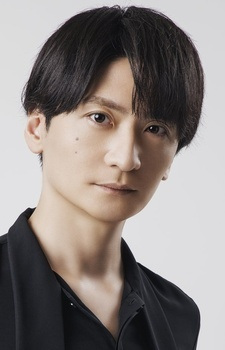
Shimazaki, Nobunaga
Japanese
Fujimaru, Ritsuka
Main
Burns, Griffin
English

Gilgamesh
Main
Seki, Tomokazu
Japanese
Gilgamesh
Main
Vincent, David
English
Gilgamesh
Main
Dawn-Claude, René
German

Ishtar
Main
Ueda, Kana
Japanese
Ishtar
Main
Lee, Mela
English
Ishtar
Main
Weiß, Jennifer
German

Kyrielight, Mash
Main
Takahashi, Rie
Japanese
Kyrielight, Mash
Main
Mendez, Erica
English

Merlin
Main
Sakurai, Takahiro
Japanese
Merlin
Main
Daymond, Robbie
English
Merlin
Main
Stollberg, Dirk
German

Archaman, Romani
Supporting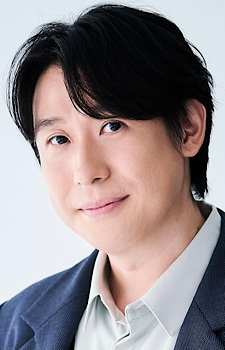
Suzumura, Kenichi
Japanese
Archaman, Romani
Supporting
Mobus, Xander
English

Arsimilat Animusphere, Olga-Marie
Supporting
Buckland, Kira
English
Arsimilat Animusphere, Olga-Marie
Supporting
Yonezawa, Madoka
Japanese
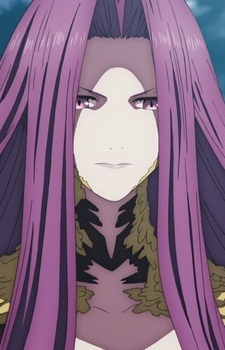
Avenger
Supporting
Asakawa, Yuu
Japanese
Staff

Fukushima, Yuuichi
Producer

Kurosaki, Shizuka
Producer

Takeuchi, Takashi
Producer, Original Character Design

Akai, Toshifumi
Director

Iwanami, Yoshikazu
Sound Director

Harada, Takahiro
Episode Director
Harada, Seiji
Episode Director, Storyboard
Hayashi, Isao
Episode Director, Storyboard, Key Animation, 2nd Key Animation, Animation Director

Ishii, Toshimasa
Episode Director, Storyboard
Kamiya, Yuki
Episode Director, Storyboard

Kimura, Hiroshi
Episode Director
Komuro, Yuuichirou
Episode Director, Key Animation
Kurata, Ayako
Episode Director, Storyboard, 2nd Key Animation

Kuroki, Miyuki
Episode Director, Storyboard, Key Animation, Assistant Director, 2nd Key Animation

Nakayama, Ryuu
Episode Director, Storyboard, Animation Director, Key Animation, 2nd Key Animation

Onsen, Nakaya
Episode Director, Animation Director
Shigehara, Katsuya
Episode Director, Storyboard, Key Animation, 2nd Key Animation
Suzuki, Moe
Episode Director, 2nd Key Animation
Yamazaki, Yuuta
Episode Director, Storyboard
Higashide, Yuuichirou
Script